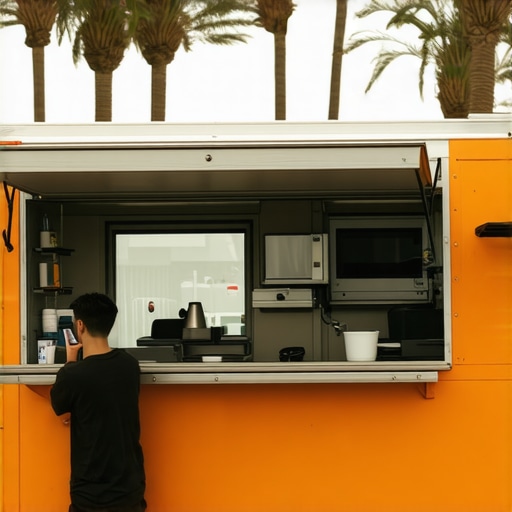
Why Your Orange County Food Truck Site is Failing to Convert Local Event Leads
You wake up, grab your coffee, and open Google Analytics. The numbers look promising. Your orange county food truck site is seeing a steady stream of traffic. People are finding you. They are looking at your menu. They are clicking through your gallery of mouth-watering street tacos and fusion sliders. Yet, when you check your inbox, it’s silent. No catering inquiries. No requests for food truck rentals in los angeles. No “Save the Date” pings for upcoming corporate mixers.
This disconnect is the ultimate frustration for any mobile food entrepreneur. In the high-stakes world of california food trucks, traffic is a vanity metric; conversions are the only metric that keeps the engine running and the grills hot. If your website is getting hits but failing to secure bookings, the problem likely isn’t your food – it’s “waste” in your digital user journey.
As a Lean practitioner, I look at business operations through the lens of efficiency and value. In the context of food truck catering los angeles, your website is the first stage of your production line. If there is friction, bottlenecking, or unnecessary complexity in that line, the customer (the lead) will drop off before they ever reach the checkout. The Orange County market is one of the most competitive in the nation. To stand out, you need more than a great recipe; you need a conversion engine that respects the customer’s time and solves their problems instantly.
Why Your Mobile Navigation is Killing Your Catering Leads
The vast majority of your potential clients are searching for catering trucks near me while on their smartphones. Whether it’s a bride-to-be planning a rehearsal dinner or a corporate HR manager looking for a last-minute lunch solution, the search happens on the go. If your mobile experience is subpar, you are essentially telling those leads to go elsewhere.
In Lean methodology, we talk about “inventory waste.” In the digital world, this manifests as information that exists on your site but cannot be easily accessed or found by the user. If a customer has to hunt for your catering menu or your contact form, that is process waste. A common culprit I see is a bloated navigation menu. I’ve written extensively about Why Your Mobile Navigation Menu is Frustrating Your Customers, and for food trucks, the stakes are even higher. If your “Book Us” button is buried three layers deep, you’ve already lost the lead.
Technical performance also plays a massive role. Issues like Cumulative Layout Shift (CLS) – where elements jump around as the page loads – create “motion waste.” The user tries to click “View Menu,” the page shifts, and they accidentally click an ad or a different link. This frustration leads to immediate bounces. When people search for a food truck in california, they expect a seamless transition from search result to booking form. If your site is sluggish or visually unstable, it signals a lack of professional operational standards.
Furthermore, consider the “Waiting” waste. If your site takes more than three seconds to load on a 5G connection in Irvine or Newport Beach, your conversion rate will plummet. You aren’t just competing with other oc food trucks; you are competing with the user’s dwindling patience. Every second of delay is a reason for them to click back to the search results and find a competitor who values their time.
The “Invisible Truck” Syndrome: Map Errors and Local Gaps
You could have the best food truck los angeles has ever seen, but if Google doesn’t know exactly where you are or what areas you serve, you are invisible. Local SEO is the lifeblood of the food truck business. However, many owners neglect the technical side of local presence, specifically map accuracy and NAP (Name, Address, Phone) consistency.
If your website lists one phone number, but your Google Business Profile lists another, or if your “service area” isn’t clearly defined in your site’s schema markup, search engines get confused. This confusion results in lower rankings for high-intent searches like food truck in orange county. Moreover, if your map pin is inaccurate, customers looking for food trucks in orange county ca might assume you aren’t available for their specific neighborhood.
I often advise clients to look at How to Fix the Map Errors Keeping Your San Diego Food Truck Invisible as the principles apply across all of Southern California. For example, a well-optimized local presence looks like this:
Visibility is the first step in the Lean “Value Stream.” If the customer cannot find the value (your truck), the stream is broken before it starts. Ensure your site clearly defines your service radius – covering everything from food trucks in san diego ca up through the heart of Orange County. Use clear, indexable text to list the cities you frequent, such as Santa Ana, Anaheim, and Irvine. This doesn’t just help users; it tells search engine crawlers exactly where to place you in the local map pack.
Beyond the Taco: Selling the Event, Not Just the Meal
A common mistake in the food truck business is treating the website like a digital version of the physical menu board. While your taco food truck los angeles might have the best carnitas in the zip code, a catering lead isn’t just buying a taco – they are buying an experience, a solution to their logistical headache, and a memory for their guests.
When someone searches for food truck rentals in los angeles, they are looking for a partner who can handle the pressure of food truck events. They need to know: Can you handle a crowd of 500? Do you have your own power source? Are you insured? Is your staff professional? If your website only shows photos of food and not photos of your truck in action at a bustling event, you aren’t answering the customer’s true questions.
Research by industry experts like Daryl King and Robert Zuetell suggests that catering failure often stems from poor operations management and a lack of clear communication. Your website should be the antidote to that uncertainty. Use your site to demonstrate your operational excellence. This is especially true for niche markets; for instance, Why Your Vegan Food Truck Is Missing Out on Los Angeles Catering Gigs often comes down to failing to highlight the “event-readiness” of the business, rather than a lack of demand for plant-based options. If you offer specialized menus, make sure you are visible to those searching for vegan food trucks near me, but back it up with proof of your ability to scale for large crowds.
Lean thinking encourages us to “see the whole.” Don’t just show the product; show the process. Include a “How It Works” section that outlines the booking process from the initial inquiry to the moment the truck pulls away from the venue. This reduces the “perceived risk” for the event planner and moves them closer to the “Submit” button.
Lean Optimization: Removing Digital Waste from Your Booking Funnel
Every extra click, every redundant form field, and every confusing line of copy is “process waste.” In Lean terms, we want to create a “Continuous Flow” for the customer. If they want to book an orange county food truck, they should be able to do so with minimal resistance.
One of the biggest conversion killers is poor “Above-the-Fold” content. This is the area of your website visible without scrolling. If a user lands on your site and doesn’t immediately see a clear value proposition and a call to action (CTA), they are likely to bounce. I discuss this in depth in Why Your Above-the-Fold Content Is Failing to Convert. For a food truck, your above-the-fold content should include your truck’s name, your primary service area (e.g., oc food trucks), and a prominent button that says “Get a Catering Quote.”
Technical debt is another form of waste. If your site’s backend is cluttered with unused plugins and heavy image files, your site speed will suffer. The Technical Reason Your Site Speed Is Tanking on Mobile is often tied to unoptimized images of your food. While high-resolution photos of your taco food truck los angeles offerings are essential, they must be compressed and served via a Content Delivery Network (CDN) to ensure they don’t bog down the user experience. A fast site is a respectful site, and respect builds trust.
Analyze your booking form. Do you really need to know the guest’s middle name or how they heard about you in the first step? Probably not. Every field you add to a form reduces the conversion rate by a measurable percentage. Stick to the essentials: Name, Date of Event, Estimated Guest Count, and Email/Phone. You can gather the granular details once the lead is “warm.” By reducing the “Muda” (waste) in your form, you increase the velocity of your lead generation.
From One Truck to a Fleet: The Role of Professional Web Design
As your business grows, your digital presence must evolve. What worked for a single truck starting out in a parking lot won’t work for a brand looking into franchise food trucks. Scaling requires systems, and your website is the most important system in your sales arsenal. If you are opening a food truck with the intent to scale, you need to build on a foundation that can handle multiple locations and high-volume inquiries.
A professional, high-converting website is a prerequisite for franchising food trucks. Potential franchisees want to see a proven model, and that includes a marketing engine that delivers leads. If your current site is failing to convert leads for your orange county food truck, it will certainly fail to support a multi-city expansion. You must move away from “DIY” web builders that offer limited SEO capabilities and move toward a custom or highly optimized platform that allows for advanced schema, fast load times, and integrated CRM (Customer Relationship Management) tools.
When you look at the food truck business from a 30,000-foot view, the trucks that succeed are those that treat their digital presence as seriously as their health department ratings. They invest in Web Design Trends 2025, ensuring they stay ahead of the curve in terms of user experience and technical SEO. Whether you are operating food trucks orange county ca or looking to expand your reach with a food truck san diego presence, your website is the face of your brand. Don’t let a “wasteful” digital journey hold back your operational excellence.
If you are in the process of opening a food truck, avoid the common pitfalls. I’ve outlined many of these in 7 Mistakes People Make When Opening a Food Truck in California. One of the biggest mistakes is leaving the website as an afterthought. In the modern economy, your website is your storefront. It’s where the first “sale” (the lead) happens. If that storefront is cluttered, slow, or hard to find, your business will struggle regardless of how good the food tastes.
Conclusion: Engineering Your Site for Success
Fixing your orange county food truck website isn’t about adding more “bells and whistles.” It’s about removing the obstacles that stand between a hungry customer and a successful event. By applying Lean principles – identifying value, mapping the value stream, creating flow, and establishing pull – you can transform your site from a static menu into a powerful lead-generation machine.
Stop letting potential food truck catering los angeles gigs slip through the cracks of a broken mobile menu or a slow-loading page. Audit your site for “digital waste.” Check your map pins, simplify your forms, and ensure your above-the-fold content tells the world exactly why you are the best choice for their next event. Whether you are serving the best orange county food truck cuisine or operating food trucks in san diego ca, your digital efficiency should match your kitchen’s efficiency.
The Orange County market is waiting. If you’re ready to stop guessing and start converting, it’s time to take a Lean approach to your digital presence. Audit your mobile experience today, or reach out for a consultation to see how we can optimize your catering operations from the first click to the final bite. Your business deserves a website that works as hard as you do.