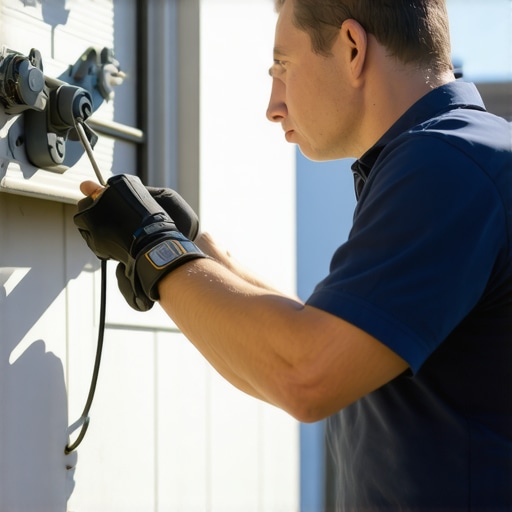
Why Your Bay Area Garage Door Cable Repair Keeps Failing Early
There is nothing quite as frustrating as hearing that loud, metallic “bang” in your garage, only to realize your door is hanging crookedly – again. You just had it fixed six months ago, or perhaps you attempted a DIY repair last weekend, and yet, the cable has snapped or slipped once more. In the San Francisco Bay Area, garage door issues are a common headache, but recurring cable failure shouldn’t be. When a garage door cable replacement fails prematurely, it is rarely a case of “bad luck.” It is almost always a result of specific environmental factors or technical oversights during the repair process.
My name is Gil Manzura, owner of Bay Area Garage Door & Gate Specialist. After years of performing garage door repair bay area residents can rely on, I’ve seen every possible reason for cable failure. From the corrosive salt air in Pacifica to the intense heat fluctuations in the East Bay, our local microclimates play a massive role. Garage door cables are essentially the “muscles” of your door. They are under extreme tension, often supporting several hundred pounds of pressure. When they fail, it’s not just an inconvenience; it’s a major safety hazard that can lead to an emergency garage door repair situation.
The “Bay Area Factor”: How Local Climate Destroys Cables
One of the most overlooked reasons for early cable failure is the unique geography of the Bay Area. If you live in San Francisco, Daly City, or Pacifica, your garage door is constantly under siege from salt air blowing off the Pacific Ocean. Salt is highly corrosive to the galvanized steel used in standard garage door cables. Even if you live further inland in San Jose or Walnut Creek, the morning fog carries moisture that can settle into the tight braids of the cable strands.
This moisture leads to “invisible” rust. While the outside of the cable might look fine, the internal strands are oxidizing and becoming brittle. This is why many homeowners are surprised when a cable that looks relatively clean snaps suddenly. The salt air accelerates this process, eating away at the zinc coating of standard cables. For coastal homes, I always recommend upgrading to stainless steel cables during a garage door cable replacement. They are more expensive upfront, but they resist the “Bay Area Factor” far better than standard galvanized options. If your repair technician isn’t accounting for your specific microclimate, your new cables are already on a countdown to failure.
Furthermore, the temperature swings in areas like the Tri-Valley can cause the metal in the tracks and drums to expand and contract. If the cables aren’t properly lubricated and adjusted for these shifts, the friction increases, leading to fraying. Understanding Why Your Bay Area Garage Door Cable Replacement Keeps Snapping Early often starts with looking at the air around you.
Common Technical Errors in Garage Door Cable Repair
If your climate isn’t the primary culprit, the issue likely lies in the technical execution of the previous repair. A “budget” fix often skips the precision required to keep a high-tension system in balance. Here are the three most common technical errors I see in the field:
1. Misalignment on the Cable Drums
At the top of your garage door, on either side of the torsion shaft, are the cable drums. These drums have grooves designed to guide the cable as it winds and unwinds. If the drum is even slightly misaligned, or if the cable isn’t seated perfectly in those grooves, it will eventually jump the track. Once a cable is “off-drum,” it begins to rub against the track or the drum’s edge. This friction causes rapid fraying. If you notice your cable looks like a “bird’s nest” or has loose silver hairs sticking out, it was likely misaligned during the last garage door cable replacement.
2. Incorrect Cable Gauge
Not all cables are created equal. Residential doors typically use 1/8″, 5/32″, or 3/16″ cables. If you have a heavy, custom wood door – common in neighborhoods like Palo Alto or Los Gatos – using a standard residential-grade cable is a recipe for disaster. The “muscle” simply isn’t strong enough for the weight. A specialist must calculate the door’s weight and cycle requirements to ensure the cable gauge matches the load. Using a cable that is too thin leads to “stretching,” which eventually results in a snap.
3. Improper Tensioning and Balancing
A garage door must be perfectly balanced. This means the tension on the left cable must be identical to the tension on the right cable. If one side is tighter, that cable will do 70% of the work while the other does 30%. This uneven load causes the overworked cable to fail prematurely. Achieving this balance requires specialized tools and an understanding of the torsion spring’s force. This is why professional bay area garage doors services are essential; we don’t just “fix” the cable; we balance the entire system.
The Hidden Link: Why Your Springs Are Killing Your Cables
Many homeowners call us for a garage door cable replacement, only to find out the root cause is actually the springs. There is a symbiotic relationship between these two components. The springs provide the lifting power, while the cables transfer that power to the door. If your springs are reaching the end of their lifecycle (usually 10,000 cycles), they lose their “oomph.”
When a spring is weak, the cables have to endure more “jerking” motions to get the door moving. This sudden tension spike is what usually snaps a cable that is already slightly worn. If you fix garage door spring issues at the same time as the cables, you ensure a smooth transfer of energy. I often tell my clients that replacing cables without checking the springs is like putting new tires on a car with a broken axle. You can read more about why these costs can add up in our guide on Why Your Bay Area Garage Door Spring Replacement Costs More Than It Should.
If you suspect your springs are the culprit, look for a gap in the coils or listen for a heavy “thud” when the door closes. A professional garage door spring replacement is often the only way to save your cables from a repeat failure. Balancing the tension across the torsion shaft is a delicate science that keeps both components healthy.
Commercial vs. Residential Cable Failures
The stakes are even higher when it comes to commercial garage door repair. In Bay Area warehouses, shipping hubs, and storefronts, garage doors may open and close 50 times a day. This high cycle count means that standard residential maintenance schedules don’t apply. Commercial cables are typically thicker and made of higher-grade steel alloys to withstand constant use.
In a commercial setting, cable failure often happens at the bottom bracket. Because commercial doors are often exposed to cleaning chemicals or heavy rain at the loading dock level, the bottom bracket (where the cable attaches) can rust out. When the bracket fails, the cable loses its anchor and snaps back with enough force to damage the track or injure a worker. For businesses, I recommend a preventative maintenance plan from bayareagaragedoorrepairinc.com to catch these issues before they halt operations. Understanding The Local Search Move for Dominating Same Day Garage Door Repair Keywords can help businesses find the right help quickly, but prevention is always cheaper than an emergency call-out.
DIY Hazards: Why “Fixing it Yourself” Leads to Early Snaps
We live in the era of YouTube tutorials, and while I admire the DIY spirit of many Bay Area residents, garage door cables are not the place to experiment. The tension in a torsion system is enough to cause severe injury or even death. Beyond the safety risk, DIY repairs often lead to early failure for several reasons:
- Lack of Proper Tools: Most homeowners don’t own winding bars or vice grips specifically designed for garage doors. Using a screwdriver or a pipe wrench to hold tension often leads to the cable slipping.
- Ignoring the Fray: A DIYer might see a slightly frayed cable and think, “I’ll fix that next month.” By the time they get to it, the fray has caught on the pulley, causing a catastrophic failure that might require a garage door opener repair as well.
- Winding the Drum Backwards: It sounds simple, but winding the cable the wrong way on the drum is a common mistake. This causes the door to rack (become crooked), putting immense pressure on one side until the cable snaps.
When a cable snaps and the door falls, it often bends the tracks or burns out the motor. What could have been a simple garage door cable replacement suddenly turns into an expensive fix garage door opener job. If you’re unsure about the state of your door, it’s better to consult an expert on How to Tell if You Need a Full Garage Door Replacement or Just a Quick Fix.
Maintenance Strategies to Double Your Cable Life
You don’t have to be a victim of the “Bay Area Factor.” By following a few simple maintenance steps, you can significantly extend the life of your garage door cables and avoid frequent garage door repair visits.
- Lubrication is Key: Use a high-quality silicone-based lubricant on your cables, rollers, and springs. Avoid WD-40, as it is a degreaser and can actually attract more grit and grime over time. Lubrication prevents the internal strands of the cable from rubbing against each other and creates a barrier against salt air.
- Visual Inspections: Once a month, look at your cables while the door is closed. Check the “bottom bracket” for rust and look up at the drums for any “bird-nesting” or overlapping strands.
- Keep Tracks Clear: Ensure no debris is in the tracks. If the door hits an obstruction, the cable can lose tension and jump off the drum.
- Professional Tune-Ups: A yearly inspection from bayareagaragedoorrepairinc.com can identify alignment issues before they lead to a snap. We use professional-grade tension meters to ensure your door is perfectly balanced.
Local businesses can also benefit from The Local SEO Strategy for Outranking National Brands in Bay Area Garage Door Searches to find specialists who actually understand the local conditions, rather than calling a national toll-free number that sends a generalist.
Conclusion & Call to Action
In summary, your garage door cables are the lifeline of your home’s largest moving part. Early failure is usually a sign that the “Bay Area Factor” of salt and moisture has taken hold, or that the system was never properly balanced to begin with. By using high-quality parts and ensuring expert installation, you can enjoy years of trouble-free operation.
If your door is acting up or you see a frayed cable, don’t wait for it to snap. Contact Gil Manzura at Bay Area Garage Door & Gate Specialist for urgent garage door repair. We’ll get your door back on track safely and permanently. Visit bayareagaragedoorrepairinc.com to schedule your inspection today.