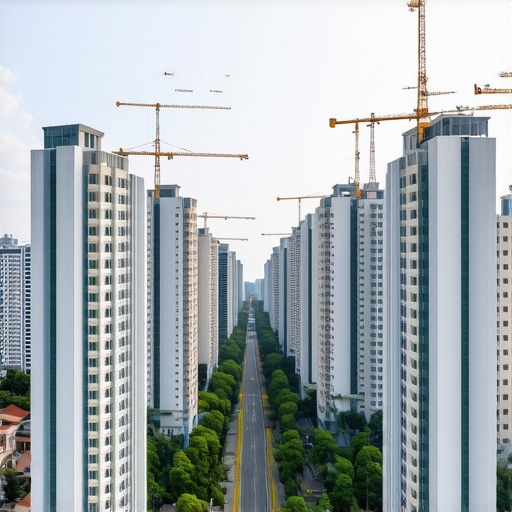
Why HIS and HMP Projects Are Suddenly Outpacing Luxury Launches in Vila Mariana
The skyline of São Paulo is undergoing a radical transformation, and nowhere is this shift more palpable than in the tree-lined streets of Vila Mariana. For decades, this neighborhood was the bastion of traditional high-end residential towers – expansive four-bedroom apartments designed for the city’s elite. However, a new paradigm is emerging in 2025. The traditional luxury model is being challenged by a “middle-out” revolution. Today, the most aggressive growth and the highest liquidity are not found in the ultra-luxury penthouses, but in projects classified as HIS (Habitação de Interesse Social) and HMP (Habitação de Mercado Popular).
This isn’t a downgrade in quality; it is a strategic evolution of the urban landscape. Driven by the latest revisions to the São Paulo Strategic Master Plan (Plano Diretor), developers have found a “sweet spot” that combines prime locations with regulatory incentives. As we look at the current market, it is clear that the focus has shifted from “prestige at any cost” to “strategic liquidity and urban integration.” In this deep-dive analysis, we will explore why these classifications are outperforming luxury launches and how they are redefining what it means to live in one of the city’s most coveted districts.
Decoding the Acronyms: What are HIS and HMP?
To understand the current real estate boom, one must first master the technical vocabulary of the São Paulo planning department. In the context of prime real estate, HIS and HMP are not synonyms for “low-income housing” in the way many might assume. Instead, they are regulatory classifications that allow developers to build with significant advantages in exchange for meeting specific income-bracket requirements for the buyers.
- HIS (Habitação de Interesse Social): Divided primarily into HIS-1 (for households earning up to 3 minimum wages) and HIS-2 (for households earning between 3 and 6 minimum wages).
- HMP (Habitação de Mercado Popular): Aimed at households with incomes between 6 and 10 minimum wages.
Why are major developers like Cyrela and Kallas pivoting toward these models in expensive areas? The answer lies in the outorga onerosa (the fee paid to the city to build above the basic floor-area ratio). Projects classified as HIS and HMP often benefit from exemptions or significant discounts on these fees. Furthermore, they allow for a higher “Coeficiente de Aproveitamento” (Utilization Coefficient), meaning developers can build more square footage on the same plot of land compared to a standard luxury residential project.
In neighborhoods like Paraíso and Vila Mariana, this translates to modern, high-tech buildings that offer the same Conceito of luxury – rooftop pools, coworking spaces, and high-end finishes – but at a price point and unit size that ensures rapid absorption by the market. This regulatory arbitrage has allowed the “popular” market to move into regions once reserved exclusively for the 1%.
The Vila Mariana Magnet: Why Location Still Rules
If the Plano Diretor provided the mechanism, Vila Mariana provided the perfect laboratory. This neighborhood has always been a “magnet” for investment due to its unique institutional density. It is home to some of the country’s most prestigious educational institutions, such as ESPM and Belas Artes, and sits adjacent to the city’s largest medical hub.
The geographic advantages are unparalleled. Residents have immediate access to both the Blue and Green Metro lines, providing a direct link to the financial heart of Faria Lima and the cultural pulse of Avenida Paulista. However, the true crown jewel is the proximity to Parque Ibirapuera. In the real estate world, distance to the park is the primary currency of value. While Moema and Paraíso also benefit from this, Vila Mariana offers a more diverse urban fabric that supports the HIS/HMP model more effectively.
The demand in Vila Mariana is multi-generational. You have students seeking compact studios, young professionals wanting to be near the Metro, and investors looking for assets that never stay vacant. This constant churn of high-quality tenants makes the neighborhood a safer bet than the more volatile luxury segments in Itaim Bibi. When you understand this demand, it becomes clear why why your brand narrative is more important than keywords when marketing these new developments; the story is about lifestyle and accessibility, not just square meters.
Developer Pivot: How Cyrela, Kallas, and Artz are Redefining the Segment
The most fascinating aspect of the HIS/HMP surge is the “premiumization” of the segment. Leading developers are no longer building “basic” units. Instead, they are applying luxury architectural standards to popular market classifications. This shift is best exemplified by the recent moves from the industry’s “Big Three.”
Cyrela has been a pioneer in this space. Through their strategic partnerships and specific product lines, they have introduced units that range from 76m² to 129m² under classifications that benefit from urban incentives. Their “The Palace” line, including the Oasis and Royal projects, proves that a project can have a luxury “soul” while technically fitting into more accessible market categories. By focusing on high-design common areas and “signature” architecture, Cyrela has managed to attract buyers who would typically only look at traditional luxury towers.
Kallas has taken a similar approach, particularly with their developments in Pinheiros and Vila Mariana. The Kallas model often focuses on the “compact luxury” niche – units that are smaller in footprint but massive in functional value. This is a critical move in a city where the cost per square meter continues to climb. They understand that the modern dweller prefers a 30m² studio with world-class amenities over a 100m² apartment in a building with nothing to offer.
Meanwhile, Artz has carved out a reputation for aesthetic excellence. Their projects often look like boutique hotels, utilizing concrete, glass, and greenery to create a modern “Paulistano” vibe. This focus on design is a key differentiator. When an HMP project looks as good as – or better than – a luxury launch from ten years ago, the choice for the consumer becomes easy. This is a prime example of 7 content formatting moves that keep readers on the page; in real estate, the “formatting” is the architecture, and it is what keeps the buyers engaged.
The Investor’s Angle: Liquidity vs. Prestige
For the sophisticated investor, the shift toward HIS and HMP in Vila Mariana is a matter of mathematics. While a luxury unit in Itaim Bibi or Faria Lima might offer the prestige of a “trophy asset,” the entry price is often prohibitive, and the exit liquidity can be slow.
In contrast, HIS and HMP units offer a much more attractive ROI profile for several reasons:
- Lower Entry Barrier: Investors can often purchase two or three HIS/HMP units for the price of one luxury apartment, diversifying their risk.
- High Rental Demand: The proximity to ESPM and major hospitals ensures a constant stream of high-quality tenants. Compact units in Vila Mariana have some of the lowest vacancy rates in the city.
- Resale Velocity: Because these units are priced for the “popular market” (which, in Vila Mariana, includes well-paid professionals), the pool of potential future buyers is significantly larger than the pool for $5M+ BRL luxury units.
Learning how to spot real value in Brooklin apartments na planta before the Berrini crowd moves in is a skill that applies equally to Vila Mariana. The key is identifying projects where the developer has maximized the HIS/HMP incentives without compromising the long-term desirability of the building. Smart investors are looking for the “hidden luxury” within these classifications – buildings that offer concierge services, high-end gyms, and prime locations, but carry the tax and regulatory benefits of social housing.
Furthermore, the “safe haven” status of Vila Mariana cannot be overstated. In times of economic uncertainty, capital tends to flow toward neighborhoods with established infrastructure and diverse economic drivers. The combination of health, education, and transport makes this area incredibly resilient. For those looking to optimize their portfolio, understanding mastering SEO in 2025: top strategies for search visibility is much like mastering the real estate market: it’s about being where the demand is already searching.
Comparing the “Big Four”: Vila Mariana vs. Moema, Pinheiros, and Itaim Bibi
To truly appreciate why Vila Mariana is leading the HIS/HMP charge, we must compare it to its peers. São Paulo’s “Big Four” neighborhoods – Vila Mariana, Moema, Pinheiros, and Itaim Bibi – each offer a different value proposition.
Moema is often seen as the primary rival to Vila Mariana. While Moema offers a flat topography and high “walkability,” it has become increasingly saturated. The prices have reached a plateau, and the “newness” factor is harder to find. Vila Mariana, with its rugged terrain and varied architecture, feels more dynamic and offers more opportunities for transformative HIS/HMP projects.
Pinheiros is the current “darling” of the hipster and tech crowd. It has seen a massive influx of studios and compact units. However, the price per square meter in Pinheiros has skyrocketed, sometimes exceeding the actual value of the location. Vila Mariana offers a more balanced “price-to-quality” ratio, making it more attractive for those who find Pinheiros a bit too overheated.
Itaim Bibi remains the king of corporate luxury. It is the land of the glass towers and the “Faria Limers.” However, Itaim lacks the residential “soul” and the institutional stability (schools/hospitals) that Vila Mariana provides. For an investor, Vila Mariana is often the “smarter” play, while Itaim is the “louder” play. When considering the exact number of internal links your new post needs, think of it like the number of amenities in a building; you need enough to provide value, but not so many that it becomes cluttered. Vila Mariana hits that perfect balance of urban density and quality of life.
The “Premium Popular” Trend in Numbers
Research indicates that the new wave of HMP projects is not just about small studios. We are seeing a significant rise in “family-sized” HMP units. For example, some of the newer launches near the Ana Rosa Metro station feature 3-bedroom layouts that technically fit the HMP price caps but offer finishes that rival luxury buildings in Paraíso. This “democratization of quality” is the defining trend of the 2025 market.
Conclusion: The Future of the São Paulo Skyline
The rise of HIS and HMP projects in Vila Mariana is not a temporary fad or a reaction to a down market. It is a structural shift in how São Paulo is being built. By leveraging the Plano Diretor, developers like Artz, Cyrela, and Kallas are proving that “popular” housing can be synonymous with high design, prime location, and exceptional investment potential.
For the buyer, this means access to neighborhoods that were once out of reach. For the investor, it means high-liquidity assets in a “recession-proof” district. And for the city, it means a more inclusive, dense, and vibrant urban core. The “middle-out” approach is winning because it aligns the interests of the city, the developer, and the resident.
As the skyline continues to evolve, the distinction between “luxury” and “popular” will continue to blur. In Vila Mariana, the future is already here, and it is classified as HIS/HMP. Whether you are looking for your next home or a strategic addition to your investment portfolio, the time to look at these projects is now.
For a complete guide on the latest launches and a deep dive into the best opportunities in the market, visit ibirapuera.studio. Stay ahead of the curve and discover why the smart money is moving into the heart of Vila Mariana.