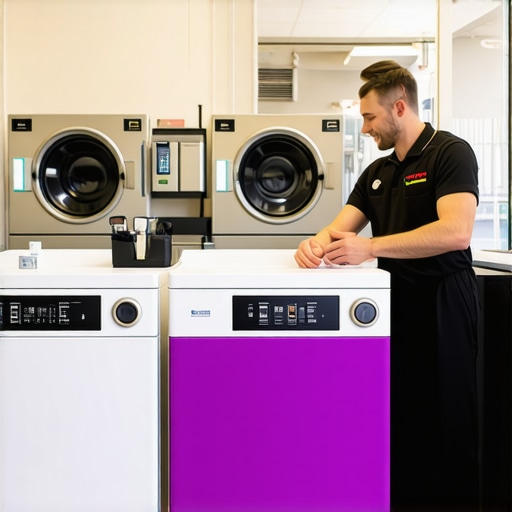
The 3 Local Citations That Actually Move the Needle for a Professional Laundry Service
In the digital age, a professional laundry service can no longer rely solely on foot traffic or a neon “Open” sign in the window. As a marketing expert specializing in modernizing the garment care industry, I, Kylie Jaramillo, have seen countless business owners get overwhelmed by the sheer volume of “SEO advice” available online. Many are told they need to be listed on hundreds of obscure directories to rank on Google. However, the truth is far simpler and more strategic. In the competitive landscape of 2025 and 2026, the “spray and pray” method of local citations is dead. Instead of chasing quantity, elite dry cleaners must focus on the heavy hitters that truly influence the “Google Map Pack.” There are only three local citations that fundamentally move the needle for a garment care business. By prioritizing these specific platforms, you can dominate neighborhood searches and ensure your shop is the first choice for local residents.
Why Local Citations are the Backbone of a Professional Laundry Service
Before we dive into the “Big Three,” we must understand what a citation actually is and why it functions as the backbone of your digital presence. In the world of local SEO, a citation is any online mention of your business’s Name, Address, and Phone number (commonly referred to as NAP). These mentions act as “votes of confidence” for search engine algorithms. When Google’s crawlers find your information consistently across the web, it validates that your professional laundry service is a legitimate, trustworthy entity operating at a specific geographic location.
The goal of managing these citations is to achieve high rankings in the “Local 3-Pack” – the boxed area at the top of search results that displays a map and three local businesses. This real estate is where the majority of clicks happen. If you aren’t appearing here, you are essentially invisible to a huge segment of your market. Understanding why your local business doesn’t show up for ‘near me’ searches often comes down to a lack of “Local Authority,” which is built through high-quality citations. Google doesn’t just look at who is closest; it looks at who is most prominent and most verified. This is why the local citation audit step you are likely skipping – the verification of core data – is so vital. It’s not about being everywhere; it’s about being in the right places with the right data.
Citation #1: Google Business Profile (The Non-Negotiable)
The single most important citation for any professional laundry service is the Google Business Profile (GBP). This is the “Godfather” of local citations. Without a fully optimized GBP, your chances of appearing in local searches are virtually zero. This profile is what feeds the Map Pack and provides Google with the most direct information about your business. However, simply “claiming” your profile isn’t enough; you must optimize it for neighborhood-specific searches.
To truly stand out, your GBP needs to be a visual and informational powerhouse. Research shows that local businesses with professional photography receive significantly more clicks than those with grainy, amateur cell phone shots. For a professional laundry service, this means showcasing the cleanliness of your facility, the precision of your shirt laundering process, and the friendly faces of your staff. These visual cues signal quality to potential customers who are often nervous about handing over expensive garments to a stranger.
Actionably, you must utilize the “Services” section of your GBP to its fullest extent. Don’t just list “Laundry”; break it down into specific offerings like wash-and-fold, wedding gown preservation, or leather cleaning. This allows Google to match your business with long-tail search queries. Furthermore, modern consumers look for convenience. Mentioning features like “next day pickup and delivery” has become a top-performing keyword feature in high-density urban markets. By treating your GBP as a living, breathing social profile – complete with regular updates and high-quality images – you provide the algorithm with the consistent data it needs to rank you above the competition.
Citation #2: Yelp (The “Best Of” Powerhouse)
While many business owners have a love-hate relationship with Yelp, its impact on local SEO for the garment care industry is undeniable. In 2026, Yelp continues to dominate organic search results for queries like “Best Commercial Laundry Services” or “Best Dry Cleaners in [City].” In many cases, Yelp’s “Top 10” lists actually rank higher in the organic search results than the individual websites of the businesses listed. This means that even if your website’s SEO is perfect, a potential customer may still find you through a Yelp list first.
Being active on Yelp provides a dual benefit: it serves as a powerful citation for Google and acts as a direct lead-generation tool. When a user searches for dry cleaning near me, Google sees the reviews and activity on your Yelp page as a trust signal. To leverage this, you must be proactive. Responding to every review – both positive and negative – signals to search engines that your business is active and cares about customer experience. This activity level is a key differentiator in local rankings.
Moreover, Yelp has integrated “Request a Quote” features that are particularly effective for commercial laundry contracts or high-volume orders. Including your “Industrial Laundry License” information on your Yelp profile can also serve as a significant trust signal, as modern consumers and corporate clients are increasingly looking for verified, licensed professionals in the NYC and Dallas business landscapes. Don’t ignore Yelp; optimize it, monitor it, and use it to capture the traffic that Google naturally funnels toward it.
Citation #3: Bing Places & Apple Maps (The Mobile & Voice Search Duo)
While Google owns the lion’s share of the search market, ignoring Bing and Apple Maps is a strategic mistake. These two platforms are the primary data sources for voice search and in-car navigation systems. When a customer uses Siri to find a laundry shop near me while driving, the data is pulled directly from Apple Maps. Similarly, Alexa users often rely on data that mirrors what is found on Bing Places.
For a professional laundry service, these citations are about capturing the “on-the-go” customer. These are individuals who need a solution immediately and are likely to visit the first location that appears on their dashboard or phone screen. Bing Places is particularly important because it often serves as a backup for other smaller directories. If your information is correct on Bing, it tends to “trickle down” to other parts of the web, reinforcing your NAP consistency.
Setting up Bing Places is relatively simple, as it allows you to sync your data directly from your Google Business Profile. This ensures that any updates you make to your office hours or service descriptions are reflected across both platforms simultaneously. For Apple Maps, ensure your “pinned” location is precise. There is nothing more frustrating for a customer than being navigated to the back alley of a shopping center when your entrance is on the main street. Precision in these mobile-first citations translates directly into foot traffic and revenue.
The Technical Pitfall: Why NAP Consistency is More Than Just a Typo
The biggest threat to your local SEO efforts isn’t a lack of citations; it’s the presence of conflicting information. This brings us to the concept of NAP consistency. If one directory lists your business as “Main St. Laundry” and another lists it as “Main Street Professional Laundry,” search engine crawlers may become confused. They might treat these as two separate businesses or, worse, lose confidence in the accuracy of your data altogether. This is the specific local citation error that hurts your authority more than anything else.
Even small variations like “St.” vs “Street” or the presence of an old phone number can dilute your ranking power. When discussing location-specific naming, such as dry cleaning lovers lane, you must ensure that every single mention of that specific branch uses the exact same formatting. If you have moved locations or changed your phone number recently, you must perform a thorough audit to scrub old data. I recommend checking out our guide on 3 critical errors in your NAP consistency audit to ensure you aren’t sabotaging your own growth through simple clerical mistakes. Consistency equals clarity, and clarity equals higher rankings.
Beyond Citations: Leveraging Schema for Explosive Growth
While citations are the external “votes” for your business, Local Business Schema is the internal “language” that helps search engines understand your website. Citations work best when they are paired with this structured data. Schema is a piece of code you add to your website that tells Google exactly what your business does, your hours, and your service area in a format it can’t misunderstand. When your Schema markup perfectly matches your top three citations, you create a “closed loop” of data that makes it incredibly easy for Google to rank you. It is the final piece of the puzzle for a professional laundry service looking to dominate their local market.
Conclusion & CTA
In the world of local SEO, the 80/20 rule applies perfectly: 80% of your results will come from 20% of your efforts. By focusing intensely on Google Business Profile, Yelp, and the Bing/Apple Maps duo, you are hitting the high-impact targets that actually move the needle. Don’t waste your time on low-tier directories that no one visits. Instead, ensure your NAP is consistent, your photography is professional, and your customer engagement is high on these three platforms.
Are you ready to stop guessing and start growing? Audit your NAP consistency today or contact me, Kylie Jaramillo, for a tailored marketing strategy designed to bring your dry cleaning business into the modern era. Let’s make your shop the highest-rated professional laundry service in your city.