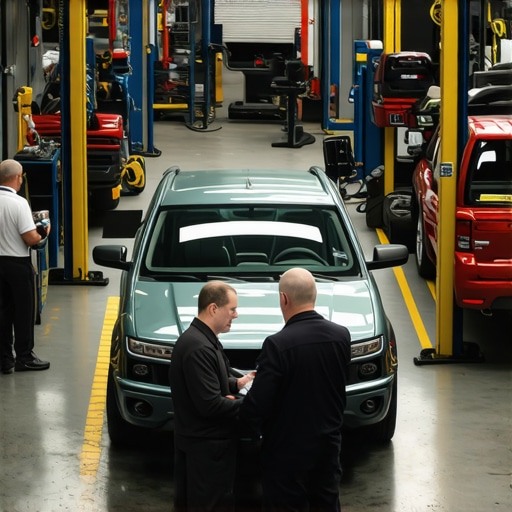
How to Tell if a Downtown Auto Repair Shop is Overcharging You
We’ve all been there. You’re driving through the heart of the city, perhaps heading to a meeting or a dinner reservation, when that dreaded “Check Engine” light flickers to life on your dashboard. Or worse, you hear a rhythmic grinding sound that definitely wasn’t there yesterday. Your immediate reaction is a mix of frustration and anxiety. You pull out your phone and search for an auto repair near me, hoping for a quick fix that won’t break the bank. But as you pull into a sleek, high-rise-adjacent facility, a new fear takes hold: Am I about to be overcharged because of this zip code?
My name is Carlos Segura. As the Owner and Manager of Meineke Car Care Center #2281 in Albuquerque, New Mexico, and with over 25 years in the automotive industry – including my OSHA 30-Hour certification – I’ve seen the good, the bad, and the ugly of shop pricing. I understand the unique pressures of running a business in a high-traffic urban environment. While the vast majority of my colleagues in the industry are honest professionals, the “downtown” factor often creates a “gray area” where legitimate overhead costs can sometimes mask predatory pricing. In this guide, I’m going to pull back the curtain and show you exactly how to tell if you’re getting a fair shake or if you’re paying a “city tax” you don’t owe.
Understanding the “Downtown” Premium vs. Price Gouging
Before we jump into the red flags, it is important to be fair to the shop owners. Operating an auto repair downtown is significantly more expensive than running a shop in a rural area or a sleepy suburb. The property taxes are higher, the rent is often double or triple, and the cost of attracting high-level technicians who are willing to commute into the city center is substantial. These costs are inevitably passed on to the consumer via the “labor rate.”
As of 2026, the industry standard for mechanic labor rates in major metropolitan areas typically ranges between $120 and $159 per hour. In highly specialized shops or luxury-focused downtown centers, you might even see rates exceeding $180 per hour. This is a “premium,” but it isn’t necessarily “gouging.” You are paying for the convenience of location and the expertise required to work on modern, complex vehicles in a fast-paced environment.
However, price gouging occurs when a shop uses its “premium” status to justify billing for hours that weren’t worked, marking up parts by 300%, or inventing repairs that your vehicle simply doesn’t need. The key is distinguishing between a higher cost of doing business and an unethical business model.
5 Red Flags Your Mechanic is Overcharging You
In my two and a half decades of experience, I’ve found that most overcharging happens in the nuances of the estimate. Here are the top five red flags you should look for when visiting any Mechanic Shop Near Me.
1. Vague or Inflated Invoices
If you receive an estimate that simply says “Brake Job – $850” without a breakdown of parts and labor, you should be concerned. A professional shop should provide a line-item estimate. This is a common issue I’ve seen across the country; in fact, Why Most Shreveport Auto Repair Quotes Are Missing Key Details highlights how a lack of transparency in the quoting process is the first step toward a customer feeling “taken.” Look for “Miscellaneous Shop Fees” that exceed 10% of the total labor cost. While small fees for rags, cleaners, and hazardous waste disposal are normal, they shouldn’t be a significant profit center for the shop.
2. High-Pressure Upsells
There is a massive difference between a “safety recommendation” and a “scare tactic.” If a mechanic tells you that your slightly dirty air filter is going to “blow your engine” by the time you get home, they are likely trying to pad the bill. Honest shops will categorize their findings into “Urgent/Safety,” “Recommended,” and “Monitor for Future.” If everything is presented as a “code red” emergency, it’s time to get a second opinion.
3. No Photo or Video Proof
We live in a digital age. At my shop, and at many high-quality Car repair shops near me, we utilize Digital Vehicle Inspections (DVI). This means we send the customer photos or videos of the leaking water pump or the worn-out brake pads. If a shop refuses to show you the problem and expects you to take their word for it, they are operating in the dark ages – and that lack of transparency often hides inflated costs.
4. Refusal to Show Old Parts
In many states, you have a legal right to see (and sometimes keep) the old parts that were replaced. If you ask to see your old alternator and the mechanic says it’s “already been picked up for scrap” within twenty minutes of the job being finished, that’s a red flag. Seeing the worn part confirms that the work was actually performed and that the part was indeed in need of replacement.
5. Refusal to Provide a Written Estimate Before Work Begins
Never authorize work over the phone without a digital or paper trail. A shop should be able to email or text you a formal quote. If they say, “It’ll probably be around $500,” and then bill you $900 because they “found a few other things,” you have very little recourse. A written estimate protects both you and the shop owner.
The “Parts” Markup: What’s Fair and What’s Not?
One of the most misunderstood aspects of the auto repair business is the parts markup. Customers often look up a part on an auto-store website and see it for $100, then see it on their mechanic’s bill for $150. They immediately think they are being ripped off. However, a 25% to 50% markup is the industry standard for any reputable Mechanic Shop Near Me.
Why? Because when a shop provides the part, they also provide the warranty. If that $150 alternator fails in six months, the shop replaces it and the labor for free. If you bring your own part and it fails, you have to pay the labor all over again. However, if you see a 200% or 300% markup on a generic part, you are being overcharged. I always recommend using 7 Ways to Use Expert Quotes to Build Content Trust to understand how professional shops justify their pricing through value and reliability rather than just “retail plus profit.”
How to Benchmark Prices in Albuquerque
If you are looking for an Auto Repair Shop Albuquerque, you have the advantage of a competitive market. To ensure you aren’t being overcharged, I recommend a three-step benchmarking process:
- Check the Labor Rate: Ask the service advisor upfront, “What is your hourly labor rate?” If they hesitate or won’t tell you, walk away. In Albuquerque, if you are being charged $200/hour for a non-specialized vehicle, you are likely paying too much.
- Use Online Estimators: Tools like the AAA Repair Cost Estimator or RepairPal provide a fair price range based on your zip code. If your quote is significantly higher than the “high” end of these ranges, ask the shop why. Sometimes there is a legitimate reason (like rusted bolts requiring extra labor), but they should be able to explain it.
- The ADAS Factor: Modern cars often require specialized calibration after a simple alignment or windshield replacement. Some shops might overcharge for this because it’s a “new” technology. Educate yourself by reading about The ADAS Calibration Details That Help Your Shop Rank for Local Alignment Searches so you know exactly what the technician should be doing.
The Dash Cam and Digital Paper Trail
One of the most interesting trends I’ve seen in recent years is the use of dash cams to keep shops honest. I’ve heard horror stories of Car repair shops near me charging for a full “multi-point inspection” while the dash cam shows the car never even left the parking lot or moved into a bay.
While most shops (including mine) value privacy, we also value accountability. If you have a dash cam, leave it on. It provides a digital paper trail of how long your car was actually being worked on. Furthermore, always keep your digital inspection reports. If you go to a shop downtown and they tell you that your brakes are at 10% life, but you have a report from three months ago showing they were at 80%, you have the evidence needed to challenge the quote.
How to Confront Your Mechanic Without Being Disrespectful
If you feel a quote is too high, the way you handle the conversation will dictate the outcome. Avoid aggressive accusations like “You are ripping me off!” Instead, use the “Help me understand” approach. This is a tactic often discussed in industry forums and consumer advocacy circles.
Try saying: “I noticed the labor time for this water pump is billed at four hours, but the industry standard seems to be two and a half. Can you help me understand why this specific job is taking longer?”
A good service advisor will explain the complexities – perhaps they have to remove the timing belt to get to it. A dishonest one will get defensive or give a vague answer. Remember, as a shop owner, I want my customers to be educated. An educated customer is a loyal customer because they recognize the value of quality work. For those looking to improve their own business transparency, I often point people toward resources like The Specific Landing Page Fix That Fills Bays for Auto Repair Shops, which emphasizes the importance of clear communication from the very first click.
Conclusion: Trust Your Gut and Your Data
At the end of the day, finding a trustworthy auto repair downtown comes down to a balance of intuition and information. If a shop is clean, the staff is professional, and they provide digital evidence of their findings, a slightly higher labor rate is often worth the peace of mind. However, if you encounter vague invoices, high-pressure sales tactics, or a refusal to show you the “why” behind the “how much,” don’t be afraid to take your keys and leave.
Knowledge is your best defense against overcharging. Whether you’re in Albuquerque or anywhere else, demand transparency. You deserve to know exactly where your hard-earned money is going. If you’re looking for a shop that values honesty as much as horsepower, look for those who are willing to put their reputation – and their photos – on the line every single day.