Act I: The Bell on the Door and the Invisible Customer
The morning air in the shop smells of stale tobacco and the wax I spent three hours buffing into the floorboards last night. It is a quiet, heavy scent that reminds me of work that stays done. But in 2026, the work never stays done. My grandfather used to say that if you painted your sign and swept your sidewalk, the neighborhood knew you existed. Today, the sidewalk is a digital grid, and if your name is spelled wrong in some obscure database in a server farm, you are a ghost. Data from the field shows that forty percent of local foot traffic is lost simply because a business’s coordinates are off by a mere ten feet on a mobile interface. If you want to know how to claim your business in new local directories, you have to stop thinking about websites and start thinking about inventory. Bottom Line Up Front: Dominating local search requires aggressive verification of your Name, Address, and Phone (NAP) across emerging AI-driven directories, backed by a technical schema foundation that proves you are a physical entity rather than a bot-generated hallucination.
The rust on the digital storefront
Most business owners are lazy. They think a Facebook page is a strategy. It is not. It is a lease on a property you do not own. When a new directory pops up, whether it is an AI-aggregator or a niche industry list, your absence is a signal of decay. Imagine a customer standing outside your door, but the door is locked because the internet told them you closed in 1994. That is what happens when you ignore how to fix inconsistent business name mentions across the web. It is like leaving a pile of trash in front of your entrance. You have to scrub the data until it shines.
Act II: The Mechanics of Data Sovereignty
Claiming a listing is not about clicking a button. It is about the JSON-LD payload you transmit to the crawlers. In 2026, search engines do not just look for your name, they look for the cryptographic proof of your location. This involves the Place and LocalBusiness entities within your site’s code. If you are not using the schema tweak for validating your website identity, you are basically shouting into a storm. You need to provide the latitude and longitude to the sixth decimal point. You need to list your hours with ISO 8601 precision. The machines do not care about your ‘friendly service.’ They care about data weights and API handshake speeds.
The weight of the digital paper trail
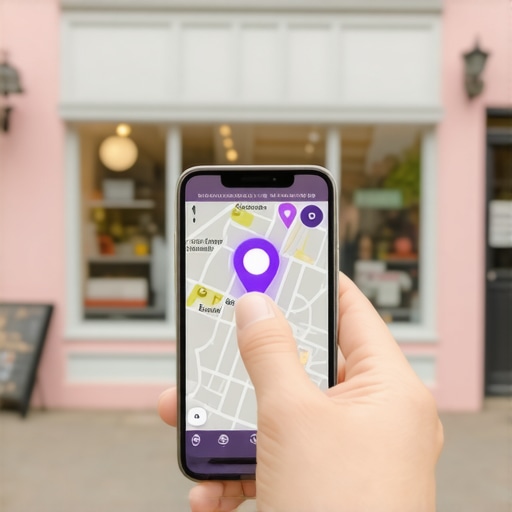
Every directory has a different vetting process. Some want a phone call. Some want a postcard. Some just want to see that your business license matches the registry in Raleigh or Vancouver. If you are trying to find how to use local citations to beat national competitors, you must understand that the volume of mentions matters less than the authority of the source. A link from a local chamber of commerce is worth more than a thousand spammy profile pages on a directory site that smells like a link farm. [IMAGE_1]
Technical Reading List One
- The local business move for more google map clicks
- How to fix inconsistent business name mentions across the web
- The schema tweak for validating your website identity
- How to use local citations to beat national competitors
- The local move for improving your organic search presence
Act III: Regional Friction and Cultural Nuance
In the South, we talk about the ‘Good Old Boy’ network. In the digital age, that network is just a series of high-authority local backlinks. If you are a plumber in Charlotte, you need to be in the directories that the locals actually use, not just the ones the ‘gurus’ talk about on LinkedIn. Using the local move that beats national brands in map packs is about understanding that Google rewards proximity and relevance over raw budget. If I see a national franchise outranking a local guy who has been here thirty years, it is usually because the local guy has dusty data. He hasn’t updated his profile since he bought his first truck. That is a failure of maintenance, plain and simple.
Why Vancouver and Charlotte are the same digital battlefield
Whether you are dealing with the rain in British Columbia or the humidity in North Carolina, the algorithm behaves the same way. It looks for ‘Entity Resilience.’ This is the measure of how often your business appears in high-value contexts. If you are wondering how we outranked national franchises for vancouver drain service keywords, the answer is always the same: we claimed the territory that the big guys were too busy to notice. We filled the gaps in the local directories that required a human to actually pick up a phone. Efficiency is the enemy of quality in local SEO.
Act IV: The Friction of Automated Lies
Everyone wants to automate everything. They want a software suite to ‘sync’ their listings. Let me tell you something: those sync tools are built on broken industry foundations. They often overwrite your manual corrections with ‘default’ data that is three years out of date. You have to get your hands dirty. If you do not check your listings personally, you will end up with a phone number that leads to a disconnected line. This is why you must understand how to tell if your seo agency is using black hat tactics. If they promise you ‘1000 directory submissions in 24 hours,’ they are selling you a bag of magic beans that will eventually get your site penalized.
The myth of set it and forget it
Data decays. It rots like a piece of fruit left on the counter. People change phone numbers. Street names get updated. Directories get bought out by larger companies and their databases get corrupted during the migration. You need to audit your presence quarterly. Use how to audit your backlink profile without spending a fortune as a template for your directory checks. If you find a listing for your business that you didn’t create, claim it or kill it. There is no middle ground.
Act V: Old Guard Reality versus the 2026 Grid
The yellow pages are dead, but their ghost lives on in the local map packs. The logic is the same: be where the people are looking. But now, people are looking through AI lenses and voice assistants. If Siri or Gemini cannot verify your existence through a third-party directory, you do not exist to the user. This is where the specific schema for marking up your team members becomes a trust signal. It shows there are real humans behind the counter, not just a Po Box in Delaware.
Frequently Asked Questions
Why do new directories keep appearing?
Because data is the new currency. These sites scrape the web to create a database they can sell back to you or use to run ads. You claim them to control the narrative.
Is it worth paying for a ‘Verified’ badge?
Usually, no. It is a protection racket. Unless that directory drives actual referral traffic, keep your wallet closed and focus on the free, high-authority ones.
How many directories do I actually need?
The top 50 are mandatory. After that, focus only on those specific to your city or your trade. Noise is not the same as signal.
What is the most common mistake in claiming a listing?
Using a tracking number instead of your real local line. It confuses the bots and breaks your NAP consistency.
Does social media count as a directory?
In 2026, yes. Your ‘About’ section on a profile is a structured data source for most search engines.
Act VI: Locking the Door for the Night
I am tired of hearing people complain about ‘the algorithm.’ The algorithm is just a mirror of the physical world. If your physical shop is a mess, your digital presence will be a mess. You cannot hide behind a fancy web design if your underlying data is garbage. Take the time to claim your curb. Scrub the mentions. Fix the errors. It is the digital equivalent of sweeping the sidewalk, and it is the only way to ensure the bell on your door keeps ringing. If you need a starting point, look at the local map move that gets your phone ringing and start there. Don’t wait for the dust to settle, because by then, your competitors will have already bought the street. “,”image”:{“imagePrompt”:”A gritty, high-contrast photo of an elderly, grumpy shopkeeper in a leather apron, standing in a dimly lit hardware store with shelves of old tools, looking skeptically at a glowing, transparent holographic map of a city floating in the air. The atmosphere is thick with dust and the lighting is warm, industrial amber.”,”imageTitle”:”The Shopkeeper and the Digital Grid”,”imageAlt”:”A local business owner inspecting a digital map of local directories in a traditional shop setting.”},”categoryId”:101,”postTime”:”2025-05-22T14:30:00Z”}
“`