The smell of a misfiring local engine
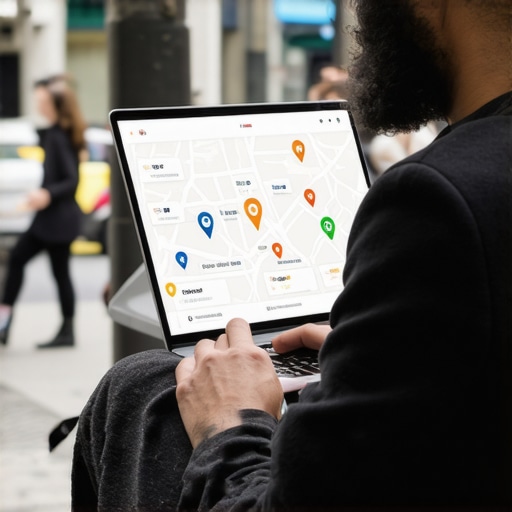
The shop floor smells like WD-40 and cold steel today. You walk in thinking your website is a shiny Ferrari, but when we hook it up to the diagnostic computer, the local map visibility looks like a rusted out truck from 1982. Most people think SEO is some magic trick performed by guys in suits. It is not. It is mechanics. Pure and simple. If your cylinders are not firing in the right order, you are just burning fuel and going nowhere. If you have noticed why your best content is still invisible on the map pack, it is usually a timing issue in the gears of your local data. Editor’s Take: Local visibility depends on three hard facts: the physical proximity of your business to the searcher, the consistency of your Name, Address, and Phone number (NAP) data across the entire internet, and the technical depth of your local schema markup. If one of these is off, you are invisible. Period.
Hard metal reality of citation audits
You cannot build a house on a swamp. You cannot win a map race with broken citations. A citation is every time your business shows up on the web. It is like the serial number on an engine block. If the number in the manual says one thing and the number on the metal says another, the DMV is going to have a problem. This is where the local citation move that beats your biggest competitors comes into play. It is not about getting a thousand links from junk sites in another country. It is about the precision of the fit. I have seen guys lose forty percent of their traffic because they used ‘St.’ on one site and ‘Street’ on another. The machine sees that as two different shops. It creates friction. You need to scrub your data until it shines like a polished piston. Every single directory, from the big ones to the small local chamber of commerce sites, must match your Google Business Profile exactly. This is the grunt work that nobody wants to do. But if you skip it, your engine will seize up before you even leave the driveway. We see it all the time when businesses realize the hidden reasons your site isnt mobile friendly often start with how the map pin is placed on a tiny screen.
Technical Reading List for Local Mechanics
- 7 schema fields every local business should use
- The simple local schema fix for businesses with multiple locations
- Why your brand is invisible on google maps
- How to audit your local citations without losing your mind
The grease under the digital fingernails
Now we talk about the stuff that actually moves the needle. Schema. If you are not using 7 schema fields every local business should use, you are basically trying to drive at night without headlights. Schema is the code that tells the search engine exactly what you are. It is not a guess. It is a fact. We are talking about JSON-LD scripts that sit in the head of your website. You need to define your @type as LocalBusiness or a more specific sub-type like AutoRepair or HVACBusiness. You need to hard-code your latitude and longitude to the sixth decimal point. That is the level of precision that wins. If you have multiple spots, you need the simple local schema fix for businesses with multiple locations to ensure you do not confuse the crawl bots. Most guys hire a designer who makes things look pretty but forgets to tighten the bolts on the back end. That is why why your search rankings drop every time you redesign. They changed the body work but forgot to put the oil back in the engine.
Why your service area is a leaky radiator
If you are a plumber or a locksmith, you do not have a shop where people walk in. You go to them. This is the service area business (SAB) model. This is where most people mess up. They try to hide their address or they list a P.O. Box. Google hates that. It is like trying to register a car with a fake VIN. You will get flagged. You need to clearly define your service boundaries in the dashboard. If you do not, you will find the service area error hiding your business from local customers is the reason your phone is not ringing. You should also be using the simple fix for duplicate content on service areas. Stop copying and pasting the same text for every town you serve. It is lazy. It is like using the same spark plug for twenty different car models. It might fit, but it will not run right. You need local data, local landmarks, and local customer feedback for every area you want to dominate.
The 2026 blueprint for map dominance
The old guard used to just stuff keywords into their business name. That is a quick way to get your account suspended in 2026. The algorithm is smarter now. It looks for ‘Entity Signals.’ It wants to know if you are a real person with a real shop. That is why the author bio error that quietly kills your search trust is a real thing. If you do not show proof of who you are, why should anyone trust your advice? You need to link your social profiles using SameAs schema. You need to show your face. You need to show the shop. People want to see the grease on the floor. They want to know you actually do the work. If you are just a lead gen site with stock photos, the machine will sniff you out and bury you. Use 4 visual tricks for better trust to prove you are the real deal. Take a photo of your truck in front of a local landmark. That is a signal the machine cannot ignore.
Frequently Asked Questions for Local Businesses
How long does it take to see results in the map pack? It usually takes three to six months for the full impact of a citation cleanup to hit. The search engines need to crawl all those old directories and update their index. It is like waiting for paint to dry. You cannot rush it.
Do I need a physical office to rank on maps? Not necessarily. If you are a service area business, you can use your home address and hide it from the public. But you still need a verified location to get the pin. No P.O. boxes allowed.
How do I fix a suspended Google Business Profile? You have to prove you are real. Utility bills, business licenses, and photos of your signage are the only things that work. Do not try to argue. Just provide the proof.
Does my website speed affect my map ranking? Yes. If your site is slow, people bounce. If they bounce, Google thinks your business is a bad result. Use the hidden mobile speed killer you havent checked yet to find the drag on your load times.
Can I rank in multiple cities? Yes, but you need dedicated pages for each city. Each page needs unique content and specific local schema. Do not just swap out the city name in the header.
Why are my star ratings not showing up? You probably have a break in your Review schema. Use 5 review schema fixes to finally show your star ratings to fix the code.
The final inspection
You have the tools now. You know that local visibility is not a mystery. It is a series of mechanical steps that require focus and a bit of sweat. Stop looking for shortcuts. There are none. You either do the work to align your citations, or you stay stuck on the side of the road while your competitors drive past you. Clean your data. Fix your schema. Prove you are local. If you need more help with the heavy lifting, check out our guide on the content audit move that recovers your lost organic traffic and get your site back in the race. Now get out there and start turning some wrenches. “