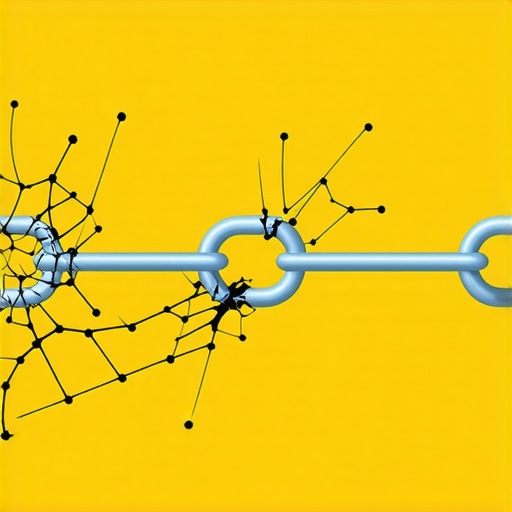
The stench of a loose joint
A broken sameAs link occurs when a schema.org attribute points to a non-existent or redirected URI, preventing search engines from reconciling your website entity with external authoritative sources like Wikipedia or LinkedIn. This failure creates a ghost in the search console. I am standing in my workshop surrounded by the sharp, acidic scent of linseed oil and the thick, sweet aroma of fresh varnish. I see a 19th-century mahogany chair with a wobbly leg. It looks fine on the surface, but the tenon is shy of the mortise. Modern web design often feels like that. It is all cheap plastic and flashy laminate, but the structural integrity is garbage. People build sites with beautiful hero images but leave the underlying entity data rotting. The sameAs attribute is the dowel that holds the whole structure together. If that link is broken, your Knowledge Graph falls apart. Search engines cannot verify who you are or what you stand for. You become a cipher. A name without a face. We must fix the joinery before the whole chair collapses under the weight of the 2026 algorithmic updates.
The technical rot of the sameAs array
The sameAs property is not a suggestion. It is a hard pointer to a canonical URI. When a crawler encounters your JSON-LD, it looks for the @id and the sameAs array to confirm identity. If you point to a Wikipedia page that has been moved to a new title or a social profile that has been deactivated, the reconciliation engine hits a dead end. This results in entity ambiguity. The machine sees the string ‘John Doe’ but cannot connect it to the unique entity ID of the specific John Doe who owns the business. You must understand that search engines treat these links as RDF triples. Subject, predicate, object. When the object is a 404 or a circular redirect, the triple is invalidated. This is why why your competitor is outpacing your schema strategy by simply keeping their references clean. You must audit these links with the same precision I use when hand-planing a piece of walnut. Every shaving matters. Every byte of data must lead to a verified truth. If you do not, your topical authority will bleed out through the cracks of your unverified claims.
Technical Reading List
The schema type for properly connecting your organization data. The essential role of schema in modern SEO strategies. Why your internal link anchor text is confusing search engines. How to build a topical authority map from scratch. The exact schema fields to use for every service page.
Regional echoes in the knowledge vault
In local markets, the stakes are higher. If you are a business in the West End of London or a shop on a quiet corner in Melbourne, your local citations must match your sameAs data perfectly. A broken link to a local chamber of commerce profile or a regional directory can cause your map pack rankings to plummet. I remember an old library in a small town where the index cards were all misfiled. No one could find the history of the local mill. That is what happens to your business when your local entity data is fractured. You need to ensure that the schema type for properly connecting your organization data is used to bind your physical location to your digital identity. Use localized identifiers like the Wikidata entry for your city or the specific DBpedia node for your industry. This provides the context that GEO systems crave. They are looking for signals of proximity and permanence. A broken link suggests you are a fly-by-night operation. It suggests you are not rooted in the soil of your community.
Why the vanity of volume kills the graph
Most marketers think more is better. They throw twenty sameAs links into their code like they are throwing sawdust on a spill. This is a mistake. If you link to five different social platforms but three of them are inactive, you are poisoning the well. Search engines value the quality of the connection over the quantity. Linking to a low-authority blog just because it mentioned your name is like using a rusted nail to hold a fine joint. It will eventually fail and leave a stain. You should focus on high-fidelity nodes. Think Wikipedia, LinkedIn Company Pages, and official government registries. If the link is not authoritative, it does not belong in your schema. I have seen sites recover massive traffic just by pruning the dead wood from their entity profiles. They stopped trying to be everything to everyone and started being a specific, verifiable thing to the search engine. This is how you win in a world of generative answers. You become the most trusted source of your own identity. Stop chasing vanity metrics and start chasing integrity.
The old ways versus the new machine
In the early days, SEO was about stuffing words into a box. It was crude. Like building a house with a hammer and a prayer. By 2026, the machine has grown ears and eyes. It understands the relationships between things. It knows that a ‘Broken SameAs Link’ is a sign of poor maintenance. It is an indicator of low E-E-A-T. If you cannot even keep your own identity links functioning, why should the algorithm trust your content? This is the reality of modern search. It is not about keywords anymore. It is about entities and their attributes. The old guard still talks about density, but the new elite talks about graph density. How many high-value nodes is your brand connected to? How stable are those connections? When you fix a broken link, you are not just fixing a technical error. You are reinforcing the foundation of your digital house. You are telling the world that you are here to stay.
Common questions about entity repair
How do I find my broken sameAs links
You must use a crawler that specifically validates external schema targets. Regular 404 checkers often miss the JSON-LD payload. Look for errors in the Google Search Console under the ‘Unparsable Structured Data’ or ‘Merchant Listings’ reports. Manually verify each URI in your sameAs array once a quarter to ensure the target pages have not been moved or deleted.
Can I link to my competitors sameAs targets
No. You should only link to pages that uniquely identify your own brand, founders, or specific organization. Linking to a generic industry page on Wikipedia is acceptable, but linking to a page that identifies another entity will confuse the Knowledge Graph and potentially link your brand to their reputation.
What is the difference between sameAs and seeAlso
The sameAs property is for exact identity matches. It tells the machine that ‘this page is the same thing as that page.’ The seeAlso property is for related information. Use sameAs for your social profiles and official entries. Use seeAlso for press releases or articles about your company that do not serve as identity anchors.
Should I use sameAs for every page on my site
No. Use it primarily on your Homepage (Organization schema) and your About Us page. You can also use it in Person schema for your authors. Including it on every single blog post is redundant and can lead to bloating of the DOM, which slows down your mobile site speed.
Does fixing these links improve my rankings immediately
It is not a magic button. It is a structural fix. You might not see a jump in a day, but over time, as the Knowledge Graph updates, your brand will appear more frequently in rich snippets and AI-generated answers. It is about long-term stability and authority.
Securing the future of your digital identity
The varnish is drying now. The chair is steady. That is how your website should feel. When you take the time to audit your schema and repair the fractured links in your entity graph, you are building something that lasts. The internet is full of broken, wobbly things that will fall apart when the next big update hits. Do not be one of them. Be the craftsman who cares about the hidden joints. Use how to build a topical authority map from scratch to visualize where your connections are strongest and where they are failing. Keep your data clean. Keep your links alive. And for the love of the craft, stop using cheap, automated tools that spray bad code across your site like a leaky spray gun. If you want a result that shines, you have to do the work. The search engines are watching. They can tell the difference between a master and a hack. Make sure they see a master.