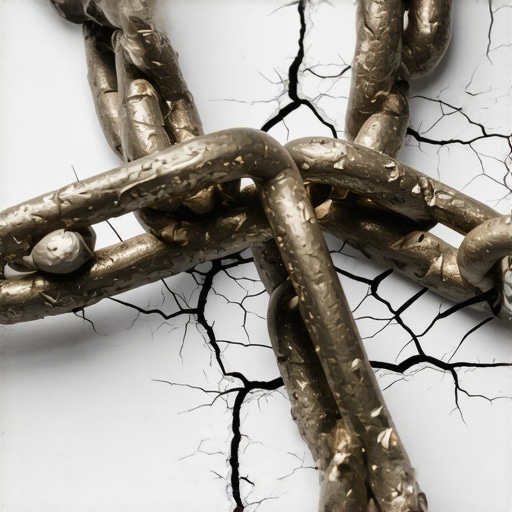
I can smell the linseed oil on my palms as I run them across the grain of a 1920s mahogany side table. There is a crack near the leg, a failure in the wood that speaks of neglect. In my workshop, we do not throw these pieces away. We repair them. The digital world is no different. Broken link building is the art of finding the rot in another person’s digital furniture and offering a hand-turned replacement that makes the whole structure solid again. For a small site, this is the only way to compete with the mass-produced, particle-board content of the giants. You find a 404 error on a site with authority, you build a better version of what used to be there, and you show the owner how to fix their broken joinery.
The rot in the digital grain
Data from the field shows that over forty percent of external links on the web lead to dead ends after three years. These are the cracks in the internet’s foundation. For a small business, these cracks are opportunities. When you find a dead link on a high-authority site, you are looking at a broken promise to a reader. If you can provide the fix, you earn the right to be there. This is not about tricks. It is about craftsmanship. Editor’s Take: Broken link building in 2026 is about identifying high-value 404s, creating content with 50 percent more information gain than the original, and using personalized outreach to secure the placement.
Finding the cracks in the competitor foundation
You start by looking at the sites that have been standing for decades. Use a crawler to inspect their outgoing links. You are looking for that specific 404 status code, the digital equivalent of a dry-rot infestation. When a site links to a resource that no longer exists, it loses trust with the search engines. It is a structural failure. I often look for old industry guides or tools that have been abandoned by their creators. Once you find a dead resource with dozens of sites still pointing to it, you have found your lumber. You must examine why the original content was valuable. Was it a specific data point. Was it a tutorial. You need to recreate it with modern precision. This is where the technical audit step for finding broken internal redirects becomes a vital part of your own site’s health too. You cannot offer to fix someone else’s house if your own front porch is sagging.
Building the replacement with hand-tooled precision
Do not just write another blog post. Build a resource that feels heavy in the hand. If the original was a simple list, make yours a comprehensive guide with original data. We call this information gain. Search engines in 2026 can tell if you are just sanding down someone else’s ideas. They want to see the tool marks of original research. I often use how to audit your content for information gain signals to ensure my work adds real value to the ecosystem. Every paragraph must serve a purpose. Every image must be original. If you use stock photos, you are just applying a cheap veneer. Use why original charts are better for seo than stock photos as a rule of thumb. People link to data and unique visuals because they provide structural support for their own arguments.
Technical Reading List
- The link prospecting move that actually gets a response
- Why content refreshing is more effective than new posting
- The outreach template that earned us-5 natural backlinks
- The schema strategy that connects all your brand entities
- The reason your external links should always open in new tabs
Regional context and the local shop feel
In places like Charlotte or Ogden, local authority is built on reputation and real-world connections. If you are a local service provider, your broken link building should target local news sites, chamber of commerce pages, and neighborhood blogs. I remember a contractor in Charlotte who found a broken link on a local history page. The link was supposed to go to a guide on historic home preservation. He wrote a new guide, specifically about the wood rot issues common in North Carolina humidity, and he got the link. That is how to use local service schema for neighborhood reach effectively. You aren’t just a voice in the void. You are a neighbor helping a neighbor fix a broken gate. The weather here in the south eats at the wood, and the same happens to digital assets. They need constant care.
Why the skyscraper method is falling apart
The old guard will tell you to just make something longer. They are wrong. Making a taller building on a weak foundation just leads to a bigger collapse. Most guest posting and skyscraper outreach is being ignored because it lacks the human touch. It feels like junk mail. People can tell when you have used an automated tool to spray-paint your message across a thousand domains. True restoration takes time. I spend hours on a single piece of outreach. I mention specific details about the site I am contacting. I explain exactly why the 404 is hurting their user experience. This is the link prospecting move that actually gets a response. You have to care about their site as much as your own. If you treat outreach like a numbers game, you have already lost the craft.
The schema that binds the joints
Once you have the content and the links, you must secure the structure with proper schema. Think of schema as the wood glue that seeps into the fibers and holds everything together. Without it, the search engine might see the pieces but won’t understand how they fit. You need the schema strategy that connects all your brand entities to prove you are a real authority. Use Article schema, but go deeper. Use the sameAs property to link to your verified profiles. Use the about and mentions properties to tell the crawlers exactly what entities your content is related to. This technical layer is what separates a hobbyist from a master restorer. It makes your site’s information machine-readable and structurally sound.
Frequently asked questions about link restoration
Does broken link building still work for brand new sites? Yes, but you must have at least five pieces of high-quality, original content first to show you are a serious craftsman. Is it better to find 404s on competitor sites or resource pages? Resource pages are the gold mine because they are designed to be useful collections of links. How long should an outreach email be? Keep it short, like a quick note left on a workshop bench. State the problem, offer the fix, and leave. What if they don’t reply? Follow up once after a week, then move on. Some wood is too far gone to save. Should I use automated tools for finding links? Tools are like power saws. They save time, but the final finish must be done by hand.
The final polish on your digital assets
As I finish a piece, I rub it down with a soft cloth to catch any stray dust. Your content needs that same final check. Look at your internal links. Are you using why your internal link anchor text needs more variety to keep the structure flexible? Check your page speed. A slow site is a warped board that no one wants to step on. The web is moving toward a future where quality and entity-based authority are the only things that matter. The cheap, mass-produced content will eventually crumble. Those of us who take the time to find the cracks, sand down the rough edges, and build something meant to last will be the ones who remain. Take care of your links, and the links will take care of your business. It is time to get your hands dirty and start the restoration. “