Act I The Ghost in the Voice Assistant
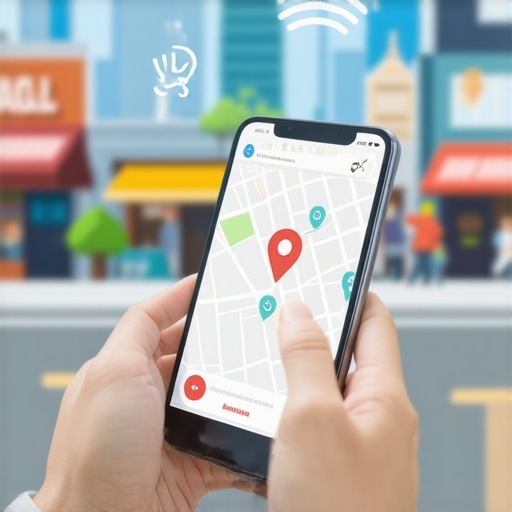
The shop floor is cold today. It smells like WD-40 and the faint, metallic sting of ozone from the welder in the back corner. My knuckles are raw from a 10mm wrench that slipped off a seized bolt ten minutes ago. You are standing there, holding your phone, shouting at a piece of glass because it can’t find the nearest radiator shop. This is the reality of local search. It is not a digital mystery. It is a mechanical failure of the information pipeline. To optimize for voice search, you must build conversational bridges between natural human speech and rigid database structures using nested schema and mobile-first architecture. If the data does not flow, the business dies in the shadows of the second page. Voices are messy. They are full of regional slang and frantic energy. When a driver in a breakdown lane asks where to get a tow, they are not typing keywords. They are looking for a solution that loads in under two seconds. The friction between a user’s question and your website’s answer is what kills your ranking. You need to stop thinking about strings and start thinking about things. Entities matter more than keywords ever will. A search engine needs to see your shop as a physical node in a geographic network, not just a collection of blog posts about oil changes. It is about the torque of your data. If you don’t tighten the bolts on your local entity mapping, your competition will drive right past you.
Technical Reading List for the Modern Architect
- Local Service Schema for Neighborhood Reach
- Mobile Performance Checklist
- Landing Page Fixes for Repair Shops
- Fixing Broken Rich Snippets
- Image Optimization for Mobile Search
Act II The Wiring Harness of Structured Data
Think of your website as an engine. The schema markup is the wiring harness that connects the sensors to the computer. If there is a short in the wire, the check engine light comes on and the system defaults to safe mode. In the world of search, safe mode means you don’t show up in the map pack. Local SEO mechanics rely on Entity Linking and the SameAs attribute to prove to search engines that your digital footprint matches your physical shop door. You need to be using local service schema to define exactly what you do and where you do it. Google is not reading your mind. It is reading your code. When you nest your JSON-LD correctly, you are handing the algorithm a map. Most people mess this up. They copy and paste a generic snippet and wonder why they aren’t ranking. You have to specify the serviceArea, the geoCoordinates, and the openingHours with surgical precision. If your site says you’re open but your Google Business Profile says you’re closed, the engine stalls. This is where linking your reviews to your map profile becomes the high-octane fuel for your visibility. You are building a web of trust. Every review is a data point. Every local citation is a bolt that holds the frame together. If the frame is weak, the whole structure collapses under the weight of a voice query. A voice assistant needs a definitive answer. It doesn’t want a list of possibilities. It wants the one shop that it knows, for a fact, is five minutes away and has a 4.8-star rating. That certainty comes from the schema, not the copy.
Act III The Kansas City Friction and Regional Data
I remember a guy in Kansas City who couldn’t figure out why his traffic dropped off a cliff after a site update. He had the best content in the metro area, but his mobile menu was a disaster. Users would click, the site would hang, and they’d bounce faster than a rubber ball on concrete. Regional search is brutal. In places like KC, people want direct answers about car accident claims or local repair rates. They are using voice search while driving across the Bond Bridge or navigating the I-35 corridor. If your site isn’t optimized for those frantic, hands-free queries, you are invisible. Mobile performance is the fuel pump of local search; if it clogs, the user leaves before the first page even loads. You have to look at your mobile performance checklist and realize that every millisecond is a dollar lost. We saw a similar issue with a diesel mechanic in Las Cruces who was losing business because his site wasn’t showing up for ‘mechanic near me’ queries. The problem wasn’t his skill. It was his lack of local entity signals. He didn’t have his address in the footer properly tagged. He didn’t have his phone number as a clickable link. These are the basic components of the engine. If you forget to put the oil cap back on, you’re going to have a mess. Local content needs to mention landmarks, neighborhood names, and local events. This isn’t for the users. It’s for the GEO layers that want to see geographic relevance. Tell the machine you are in the Crossroads District. Tell it you are near Liberty Memorial. That is how you build a local footprint that the voice assistant can’t ignore.
Act IV Why Your Keywords are Dead Metal
Most local content fails because it tries to rank for terms people type rather than questions people ask when their hands are covered in grease. The old guard will tell you to stuff your headers with keywords. That’s like trying to fix a fuel-injected engine with a carburetor kit. It doesn’t work anymore. You need to focus on intent-matching. When someone asks their phone ‘How do I fix a leaky faucet?’ they aren’t looking for a history of plumbing. They want a step-by-step guide or a button to call a pro. Your content marketing needs to be built around these ‘Micro-Moments.’ If you aren’t answering the ‘How,’ ‘Where,’ and ‘When,’ you are wasting space. You have to build a content strategy that anticipates the next question. Most advice is too soft. It talks about ‘engagement’ and ‘brand voice.’ Forget that. Talk about ‘Utility.’ Does the page work? Does it solve the problem? Does it load on a cracked screen in a rainstorm? We often see businesses fail because they ignore the mobile UX errors that drive people away. They have big, beautiful hero images that take five seconds to load. That is a vanity project, not a business tool. You need to optimize those images so they don’t drag down your core web vitals. Heavy files are like lead weights in the trunk. They slow you down, kill your mileage, and make the whole ride feel sluggish. Strip it down. Make it fast. Make it useful. That is how you win the friction war.
Act V The 2026 Reality of Answer Engines
The future of local SEO is predictive, meaning your site must answer the question the user hasn’t even finished thinking yet. We are moving away from search engines and toward answer engines. If your site provides a ‘maybe,’ you lose to the site that provides a ‘yes.’ This requires a deep dive into advanced schema techniques that define your expertise and authority. You can’t just say you’re an expert. You have to prove it with data points. Link to your professional degrees. Link to your business licenses. Use the specific schema code for verifying credentials. This is how the AI knows you aren’t just another click-farm site. The machines are getting better at spotting the fakes. They look for ‘Information Gain.’ If you are just repeating what everyone else said, you are redundant. You are scrap metal. Add a new perspective. Use first-party data. Show the results of a test you ran in your own shop. That is the only way to stay relevant in an era where AI can churn out generic blog posts by the billion. You have to be the human in the loop. You have to be the one with the grease under your nails.
Frequently Asked Questions on Local Voice Search
Does voice search use different keywords than typed search? Yes. Voice queries are typically longer and phrased as complete questions. They often include words like ‘who,’ ‘what,’ ‘where,’ and ‘near me.’ You need to target these natural language patterns rather than short-tail phrases.
How does web design affect my voice search ranking? If your site is slow or hard to navigate on mobile, search engines will hesitate to recommend it as a top answer. Page speed and mobile-friendliness are direct ranking factors for the snippets that voice assistants read aloud.
Is schema markup mandatory for local SEO? It is the most effective way to communicate your business details to a machine. Without it, the search engine has to guess your location and services, which often leads to errors or omissions in the map pack.
Why is my business not showing up for ‘near me’ searches? This usually stems from a lack of local citations, inconsistent NAP (Name, Address, Phone) data, or a failure to properly set your service area in your Google Business Profile and schema code.
How often should I update my local content? Freshness is a signal of reliability. If your hours or services change and your site doesn’t reflect that, you are providing bad data. Regular audits of your content for cannibalization and accuracy are vital.
Can images improve my local search visibility? Absolutely. Optimized images with proper alt text and geotagging can appear in visual search results and improve the overall engagement metrics of your local landing pages.
Act VI The Final Torque
The sun is going down. The shop lights are humming. You’ve done the work. You’ve tightened the connections, flushed the system, and tuned the timing. Optimizing for voice search and local SEO is an ongoing maintenance task, not a one-time repair. You have to keep checking the diagnostics. You have to look at your Search Console data to see where the leaks are. If you see a drop in impressions, find out why. Is it a crawl error? Is it a broken link? Is it a competitor who just installed a better turbocharger? Don’t let your digital infrastructure rust. Keep it clean. Keep it fast. Most importantly, keep it real. People can smell a fake from a mile away, and so can the algorithm. If you want to dominate the local market in 2026, you need to be the most reliable source of information in your zip code. Now, put the tools away and go get some results. The road is waiting.