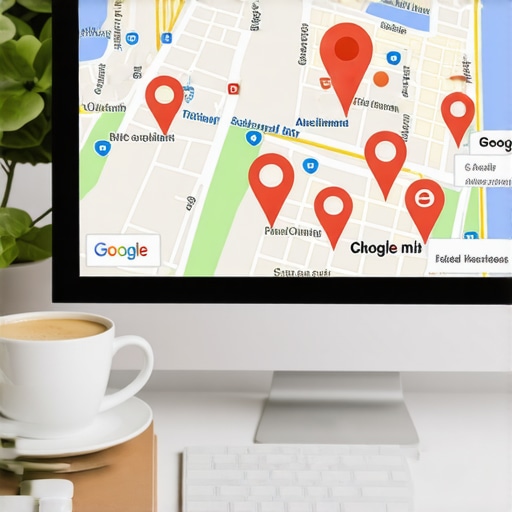
The Hidden Reason Your GMB Ranking Tool Is Showing False Positives
As a seasoned Local SEO and GMB Specialist, I have seen the same scenario play out hundreds of times. An agency owner logs into their dashboard, sees a beautiful 13×13 grid of bright green circles, and sends a celebratory report to their client. The report claims they are ranking #1 for their primary keywords across the entire city. Yet, the client calls back two days later with a frustrating question: “If we are #1, why hasn’t my phone rung once this week?”
This discrepancy is the “False Positive” epidemic. If you are relying on a standard gmb ranking tool to measure your success in the Google Map Pack, you might be looking at a map that doesn’t actually exist for real users. In the evolving landscape of 2025 and 2026, the gap between “reported rankings” and “real-world visibility” has become a chasm. Imagine your competitors are ranking in Google’s Map Pack while you’re looking at a green report that doesn’t translate to dollars. That’s the danger of a disconnected toolset.
In this guide, I’m going to pull back the curtain on why these tools fail, the technical reasons Google sees the world differently than your software does, and how you can finally get data that matches your client’s bank account.
Section 1: The “Green Grid” Illusion
The “Green Grid” is the ultimate vanity metric in the local SEO world. Most agency owners use grid trackers because they are visually impressive and easy to explain to clients. However, these reports often represent a “False Positive.” A false positive occurs when your gmb ranking tool indicates you are in the top three positions (the Map Pack), but a real person standing at those exact coordinates would see a completely different set of results.
Why does this happen? Most gmb ranking tool options on the market operate via API pings or data center requests. They simulate a search from a specific latitude and longitude, but they do so from a static environment. They lack the “noise” of a real human user. When an agency relies solely on these reports, they are essentially practicing SEO in a vacuum. You might want to read more about The Hidden Flaws in Most Google Maps Ranking Tools to understand how these gaps initially formed.
The danger is two-fold. First, it creates a false sense of security for the SEO professional. Second, it destroys trust with the client. When the “green dots” don’t result in leads, the client begins to suspect that SEO is “snake oil,” when in reality, the strategy simply isn’t reaching real people. To combat this, seo tools for agencies must move beyond static reporting and toward behavioral simulation.
Section 2: The Technical Gap: Static IPs vs. Real Movement
The hidden reason your rankings aren’t real lies in how Google identifies a “user.” In 2025, Google’s algorithm is no longer just looking at where a search happens, but how the searcher is behaving. Most tools use static IP addresses from data centers (like AWS or Google Cloud) or residential proxies that stay stationary.
Google’s AI-driven local algorithm, heavily influenced by the “Opossum” update and subsequent proximity refinements, prioritizes mobile users with active GPS and a history of movement. A tool checking from a fixed server IP sees a “sanitized” version of the Map Pack. Conversely, a real human carrying a smartphone has a device fingerprint, a movement history, and a “Live” GPS signal.
If your tool isn’t accounting for the fact that Google knows the difference between a server in Virginia and a person walking down Main Street, your data is compromised. This is often Why Your Local Maps Ranking Just Disappeared in the eyes of real customers while remaining “green” in your software. Google has become incredibly adept at filtering out non-human search patterns. If a search request doesn’t have the “heartbeat” of a real mobile device, Google serves a default, generic ranking set that often favors older, high-authority listings rather than the most relevant local options.
Section 3: Proximity, Prominence, and the “Live Drive” Factor
Proximity has long been the #1 ranking factor in the Map Pack, but the definition of proximity has shifted. It is no longer just about the distance between the business and the searcher; it is about the intent of the searcher’s movement. Google tracks “Driving Directions” and “Search Near Me” queries that occur while a device is in motion. These are high-weight ranking signals because they represent a high probability of a transaction.
This is where the concept of Live Drive comes into play. If your SEO strategy doesn’t involve simulating or generating real-world movement signals, you are fighting an uphill battle. Static rankings are being replaced by “dynamic visibility.” For example, a business might rank #1 for someone sitting in their office, but drop to #5 for someone driving toward the business. Why? Because Google’s algorithm calculates which business is most “convenient” based on traffic patterns and current transit.
To truly dominate, agencies need to understand The Specific Way Viper Tools Influences Google Map Rankings. By moving away from static pings and toward signals that mimic real transit, you can “wake up” the algorithm and expand your proximity bubble. Without this “Live” factor, your GMB profile remains trapped in a tiny radius, regardless of what your ranking tool says. This is especially critical when implementing The Local Map Tactic for Multi-Location Businesses, where proximity bubbles often overlap and conflict.
Section 4: The Role of CTR Manipulation in 2025
We cannot discuss modern GMB rankings without addressing Click-Through Rate (CTR). There is significant debate on Reddit and SEO forums regarding the effectiveness of a ctr manipulation tool. The truth is that standard, “bot-heavy” manipulation is easily detected by Google’s 2025 spam filters. If a thousand “users” click your listing from a single IP range without any prior browsing history, Google will simply ignore those signals – or worse, suspend the profile.
However, the market has evolved. Modern ctr manipulation software now focuses on “behavioral simulation.” This means the AI mimics a real human journey:
- The “user” searches for a broad term.
- They scroll past the ads.
- They check out a competitor (to show a natural comparison).
- They finally click your listing, check the photos, and request driving directions.
This “Human Loop” is what tells Google that your business is the most relevant result. When you use advanced ctr manipulation tool technology, you aren’t just “faking” clicks; you are providing Google with the behavioral data points it craves to justify moving you up in the rankings. This is the only way to break out of a small proximity bubble and start ranking in the surrounding suburbs where your actual customers live.
Section 5: How to Audit Your Current GMB Ranking Tool
If you suspect your reports are showing false positives, it’s time for a manual audit. You cannot manage what you cannot accurately measure. Here is how I recommend auditing your local visibility:
- The Mobile Movement Test: Take your phone, turn off Wi-Fi, and open an incognito browser. Physically drive two miles away from your business and search for your primary keyword. Does the result match your gmb ranking tool? If you are #1 on the tool but #7 on your phone, you have a data center bias problem.
- Check for “Ghost Rankings”: Use a tool like Kraken to see a more realistic “Heat Map” of actual visibility. Kraken is designed to bypass the standard API limitations that cause false positives, giving you a clearer picture of where your “Proximity Wall” actually sits.
- Audit Your Technical Foundation: Sometimes the lack of real-world rankings is due to poor underlying data. Ensure you have implemented The Specific Schema Fix for Better Local Visibility to give Google’s crawlers the correct “coordinates” for your brand.
- Analyze Engagement Metrics: Look at your GMB Insights. If your ranking tool says you’ve been #1 for a month, but your “Driving Directions” and “Website Visits” haven’t increased, your “ranking” is a ghost.
By comparing these real-world data points against your software, you can identify which seo tools for agencies are actually worth your monthly subscription and which are just providing “green circle” therapy.
Section 6: Conclusion: The Path to Real Rankings
The era of “set it and forget it” local SEO is over. In 2025 and 2026, Google’s reliance on mobile GPS signals, real-time transit data, and complex behavioral patterns means that a static gmb ranking tool is no longer enough to guide a professional strategy.
If you want your phone to ring, you must stop chasing vanity metrics and start focusing on the signals that Google actually uses to rank businesses: proximity, prominence, and real user engagement. This requires a shift from old-school SEO to a more dynamic approach that includes Live Drive simulations and sophisticated behavioral signals.
Don’t let a “Green Grid” blind you to the reality of your business’s performance. Audit your tools, embrace the power of behavioral signals, and start building a local presence that translates into actual revenue. For more insights on staying ahead of the curve, check out my guide on Mastering SEO in 2025: Top Strategies for Search Visibility. It’s time to make sure that when your ranking tool says you’re #1, your customers actually see you there.